
Adventure Birding 'n Outdoors in New Guinea's Wild West
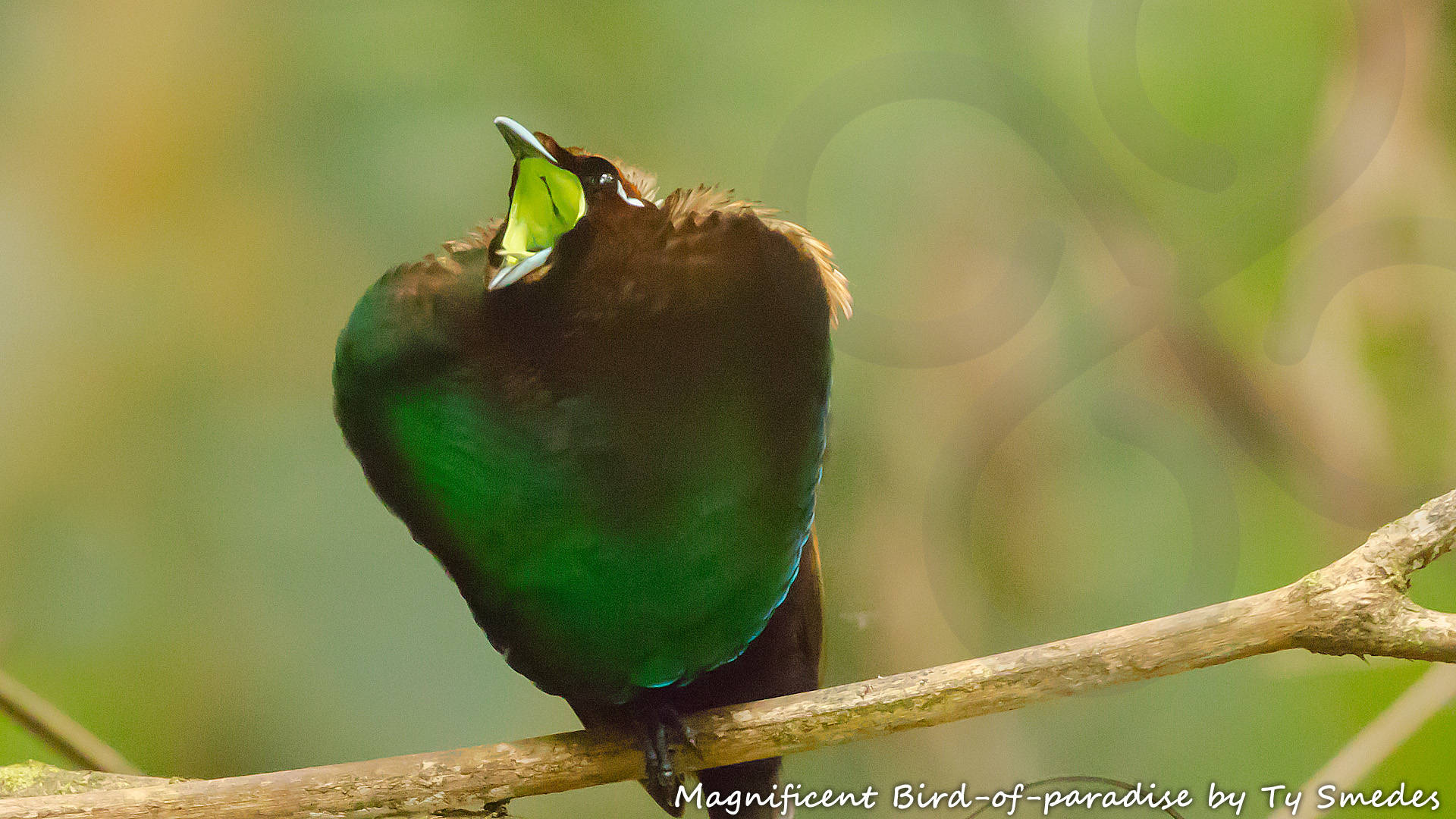
Magnificent Bird-of-paradise Diphyllodes magnificus is a widespread New Guinea foothill, hill and lower montane forest species that always is a thrill to see. Copyright © Ty Smedes smedesphoto.com
The vast and lush frontier forests of West Papua are home to some of the most glorious birds on Earth. Anyone who watched the nearly mythical birds-of-paradise doing their intimate thing in the highly-acclaimed BBC nature documentary 'Attenborough in Paradise' is destined to long ever beyond to see the real thing. But western New Guinea's diverse avifauna has so much more to offer than birds-of-paradise alone...
Think huge, man-sized yet infuriatingly wary, flightless cassowaries. Retiring megapodes with fascinating incubation strategies, adeptly manipulating environmental heat sources. A New Guinea Eagle Harpyopsis novaeguineae delivering its remarkable and far-carrying advertising call towards dusk. Or crowned pigeons abruptly breaking the relative silence when exploding in clapping wingbeats from alongside a creek at noon. Think of the profusion of parrots in all colors and sizes simply imaginable. Dazzling kingfishers, that include three single-island endemic paradise kingfishers, and the widespread, aptly-named Shovel-billed Kookaburra Dacelo rex. Think mysterious nocturnal owlet-nightjars featuring cuddly, feline faces. Glorious jewel-babblers skulking on the forest floor as if most reluctant to reveal their colors. Think utterly astonishing bowerbirds...
Very few places on Earth can rival with New Guinea's seemingly endless list of singularly unique feathered life forms. And with such a vast array of avian delights up for grabs, it remains all the more puzzling that West Papua is not simply knee-deep in birders, but in fact one of the least traveled outbacks of our planet.
Adventure birding
Birding in West Papua, one of the last untamed places left on our planet, remains hard work, even into the 21st century. The top bird-watching areas usually can only be reached after considerable hikes along what some have dubbed the steepest, most treacherous or muddiest trails in the southern hemisphere. The services of experienced local guides and porters, and a working knowledge of the Indonesian language to communicate effectively with them, are still absolute prerequisites in order to embark upon a journey into the heartlands of West Papua. On top of that, the sheer elusiveness of the birdlife of New Guinea is almost legendary, as anyone who has ever attempted to lure a melampitta into view, will readily testify. Perseverance, specialized birding skills and a profound knowledge of the local birdlife are all instrumental to successfully tracking down the many sought-after goodies.
Fortunately, Papua Expeditions has made things a whole lot more straightforward and convenient for you. Through our unparalleled ornithological expertise and singular understanding of all major bird-watching destinations in West Papua, we are both confident and delighted to bring this region's avian marvels within reach of any reasonably fit bird-watcher with a genuine sense for adventure.
I would unreservedly recommend Papua Expeditions, but anyone booking a place on an expedition must be aware that a reasonable level of fitness is required, and that in order to have a chance of seeing some of the most fantastic birds in the world one will have to endure a certain level of discomfort from heat, humidity, rain, mud, mosquitoes and chiggers. Papua Expeditions do make this absolutely clear in their pre-tour information.
Our birding philosophy
Whether you are a novice birder or an expert, whether you seek a highly focused twitching trip or a more relaxed bird-watching holiday, Papua Expeditions caters to all abilities and interests. Yet what always stands out is our passion and drive to observe and to observe well. We want you to 'get the bird' and get it well, but never at the expense of the bird itself. Our digital sound library of West Papuan birds is unrivaled, but we use field playback sparingly and cautiously, and always strive to reduce disturbance to the birdlife that we take our guests and friends to see.
Above all, we take you off the beaten track, to pristine hotspots we know inside-out. We want you to experience living and functional forests, in all their glory, but in a way that truly respects, involves and rewards indigenous peoples and meaningfully enhances the conservation outlook of all upon which your eyes feast.
Bird photography
Continuous advances in digital photography, enabling increased magnification and crisp image capturing under weak lighting conditions, are rendering photographic opportunities in West Papua's dense rainforests increasingly worthwhile, and our web site is being adorned with images captured here by our guests and friends. The elaborate displays in the mid-storey and canopy of many bird-of-paradise species are becoming much more accessible with modern long-range lenses and simply beg for the attention of the dedicated wildlife photographer.
Our well-appointed hides open up an intimate window of observation into the secretive lives of West Papua's many habitual ground-dwellers as well as its terrestrially displaying bowerbirds and birds-of-paradise. These latter include some of the most mouth-watering birds roaming the face of our planet. From the Vogelkop Bowerbird Amblyornis inornatus with its awe-inspiring so-called 'roofed may-pole' bower, and the fireball-like Masked Bowerbird Sericulus aureus, to the Western Parotia Parotia sefilata with its mind-boggling ballerina-display, and of course the nearly mythical Wilson's Bird-of-paradise Diphyllodes respublica.
While our birding itineraries primarily focus on observation, these can easily be modified and customized to meet the wishes and needs of dedicated photographers. As a starting point, we recommend to add at least two entire field days at each of the destinations on our standardized itineraries in order to enhance your photographic output.
It was a great tour! You guys provided the best possible under difficult conditions. The birds were really difficult but we got some amazing stuff. Would have been better if the light was better sometimes, the birds of paradise displaying more,... but that's bird watching.
Beyond birding
New Guinea truly is a land of birds, and out here in West Papua, birds certainly are the most conspicuous of the higher-level taxonomic groups within the Animal Kingdom. We are of course paying appropriate attention to any animals that we may come across while out birding, but it is important to be aware that virtually all mammals on New Guinea are crepuscular or nocturnal and hence usually prove extremely difficult to observe without considerable effort.
Fortunately, many components of West Papua's varied birdlife extend far beyond the interest sphere and appreciation of the dedicated birder alone. Watching electric, plumed birds-of-paradise display at a communal lek, exploding amidst all shades of green, may well rank as one of Earth's greatest natural spectacles. For those of you who like birds but are not completely besotted by them, it may be good to know that all our birding itineraries can easily be modified and customized to meet the diverse needs of guests with a more general appetite for natural history.
❯Read more...
Related links
❯Browse our checklist of the birds of West Papua