
Adventure Birding 'n Outdoors in New Guinea's Wild West
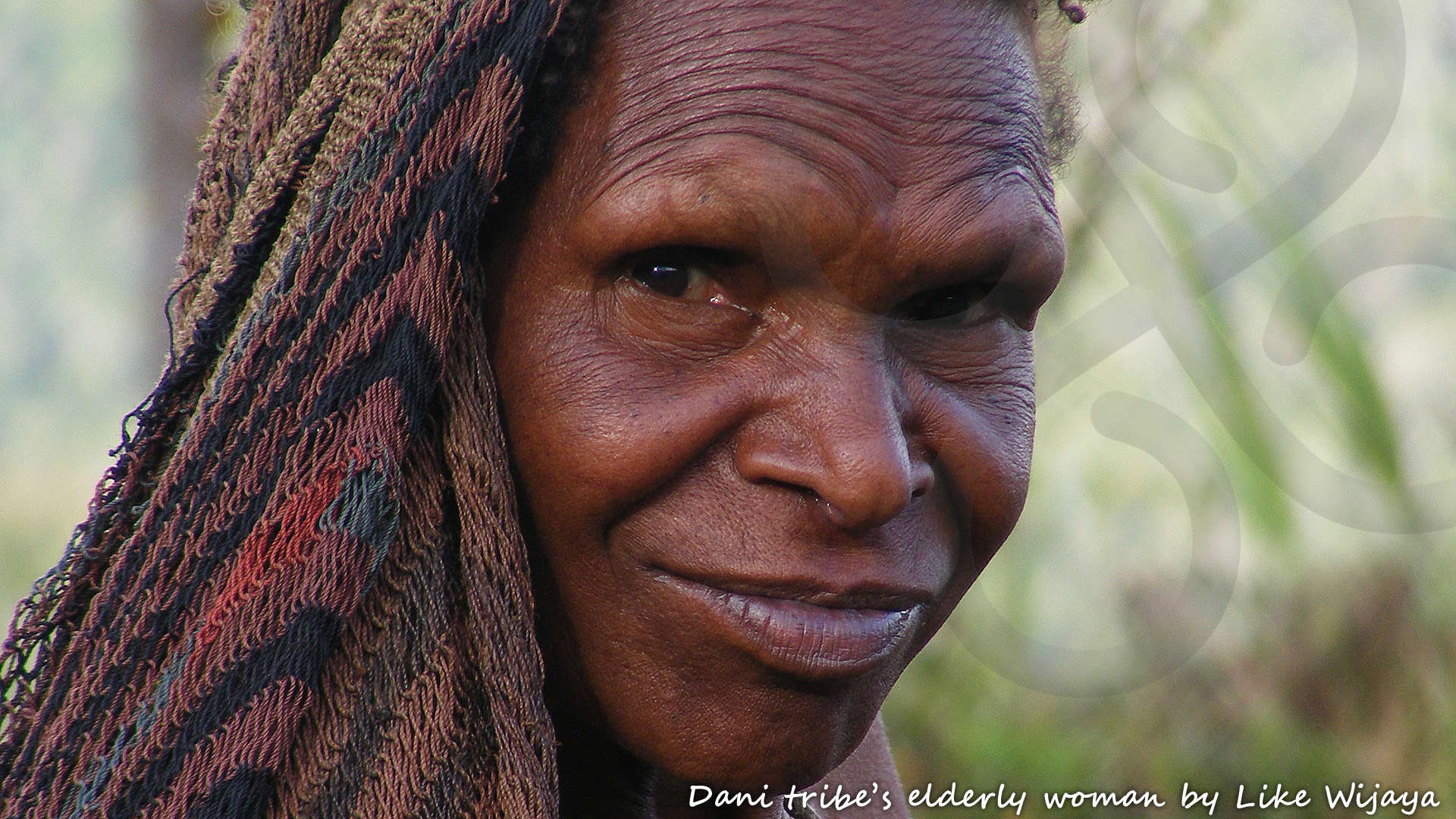
The Dani people cultivated the 80 km long and up to 20 km wide Baliem upland valley in the Snow Mountains completely unnoticed by the outside world until as recently as 1938. Copyright © Like Wijaya
The term 'ecotourism' still covers many overtones, and in the absence of an independent, authoritative and reputable national certification scheme in Indonesia, just about anybody presently can claim to be operating an environmentally and socially responsible travel business in West Papua. To too many, ecotourism is merely synonymous with 'nature travel', which more often than not entails significant negative environmental and social impacts. Yet to a growing number, ecotourism is a deeply social and entrepreneurial approach to achieving long-term conservation goals.
Naturally, at Papua Expeditions we adhere to the latter social movement while also wishing to emphasize that — however much genuine ecotourism endeavors to create social and ecological benefits — it nonetheless is a commercial activity that can only be conducted through sound business practices. The prevailing Indonesian legislation confirms this judgment unambiguously.
Ecotourism and indigenous peoples
At Papua Expeditions we firmly do believe that carefully planned and implemented ecotourism may contribute significantly to both the conservation of natural habitats and the well-being of indigenous peoples. We recognize as our duty to ensure that indigenous communities do benefit, to the maximum extent possible, from the deployment of our ecotourism activities if these are to stand any chance of genuinely rivaling the ever increasing claims to deleterious resource extraction throughout West Papua. After all, people who earn a living directly through responsible travel are more amenable to actively help protecting the environment on which their livelihoods depend.
Indigenous peoples, still intrinsically connected to the natural world around them, often possess an uncanny intimacy with the specialty component of biodiversity that allures overseas visitors. Their services as guides, porters and cooks add quintessential couleur locale to your West Papua experience and are quite simply indispensable to the successful operation of a trip.
It is critically important to understand and appreciate to the fullest that all land in West Papua or on New Guinea more generally is considered to be owned by the indigenous New Guineans, the Papuans, who generally exercise strong control over land and resources. They are the true custodians and guardians of the future of these magnificently forested lands.
Land on New Guinea can be owned communally by all members of a village community, but more commonly is being subdivided between the various kinship groups that make up a community. Known as clans or bands, these kinship groups may internally be structured hierarchically, and further subdivide ownership accordingly between the different families that make up a clan.
Besides customary ownership proper, there are varying degrees of usage rights granted by landowners to community members more widely, mostly as a result of intermarriage between clans or other mutually beneficial exchanges. This leads to the ordinarily complex situation that any given plot or tract of land can be owned by a group of people, while at the same time a second group of individuals hold hunting or subsistence rights that fundamentally restrict the first group's ownership.
Thus, customary land tenure is inherently fluid and unstable because land borders between tribes, clans and families as well as granted usage rights tend to be loosely defined and remain closely linked to dynamic social processes. Unfortunately, tribal land disputes and associated feuds remain common in West Papua and are the primary cause for safety concerns in the context of tourism because improperly coordinated visitation of contentious lands by tourists may exacerbate existing problems or create new ones.
Before trespassing and making use of customary-owned land in Indonesian New Guinea, even for essentially non-invasive activities like bird-watching or nature recreation more generally, it is critically important to secure permission from all stakeholders involved through an open and fully participatory deliberation process seeking broad consensus.
Traditional societies in West Papua are rapidly being overtaken by the 21st century. Ever increasing cash-dependency and the decay of customary land tenure systems incite indigenous communities to no longer principally oppose resource extraction, but to merely expect to reciprocally benefit from it. Any conservation project intervention thus requires effective cash-generating alternatives to rival destructive resource use, even if communities do understand the long-term deleterious impact of such practices. Genuine ecotourism, in no small part, can make a difference here.
At Papua Expeditions we are intimately familiar with the many peculiarities of social organization and associated land tenure in West Papua, and in engaging indigenous peoples in our ecotourism activities, we have always embraced a rights-based approach, strictly adhering to the principles set forth in the United Nations Declaration on the Rights of Indigenous Peoples (UNDRIP) and, more generally, the Universal Declaration of Human Rights (UDHR).
We principally adhere to customary land rights (called hak ulayat in Indonesian) and always endeavor to strengthen and revitalize customary land tenure systems, which until recently broadly sustained biodiversity at the landscape level throughout West Papua. Increasingly, however, indigenous communities throughout the territory claim access to forest resources beyond subsistence use. As such, we do reserve the right to make the magnitude of our financial compensation for deploying non-invasive ecotourism activities on ancestral lands dependent on local conservation attitudes and the degree of active participation in habitat protection by requesting village authorities and landowners.
We exclusively employ indigenous people entitled to ancestral land rights and/or actually residing at the respective sites that we visit. Because we conclude all ground arrangements with indigenous communities directly ourselves — hence effectively eliminating third party agents outside our control — and by consistently applying a competitive salary scheme, Papua Expeditions guarantees fair remuneration of the services indigenous people provide.
By handling trips in close collaboration and continuous consultation with the people belonging to the places that we visit, we are able to both increase their economical benefits, for instance, in the form of local purchase of food surplus, as effectively reduce our impact on traditional societies.
Finally, we are also keen on training and assisting indigenous people to stream through in our organization or to develop their own derivative businesses.
100% Locally-owned
Papua Expeditions is 100% locally-owned by a multi-cultural Indonesian family of mixed Papuan, North Moluccan and ethnic Chinese origin, with traceable ancestry and residence in the Sorong area of western New Guinea since the end of the nineteenth century, and rooted within the royal houses of the former kingdom of Salawati in the Raja Ampat archipelago off Sorong and the former sultanate of Bacan in the northern Moluccas.
Our family treasures and proudly carries forward the intertwined historical perspectives, real life experiences, core values and centuries-long traditions of our varied ancestors from all walks of life, from the hereditary sovereign ruler to the newcomer who fled his war-torn homeland. And with such a diverse family background, we hope it goes without saying that the blessings of open-mindedness, tolerance, multi-culturalism and humanism are deeply entrenched in our DNA.
Come taste our inclusive tradition of hospitality and solidarity, and our egalitarian culture of fraternity, open deliberation and constructive debate. Let us immerse you in the rich cultural and natural heritage of West Papua.
Sound business practices
The 2007 Oslo Statement on Ecotourism first called for sound business practices in the sector and recognized that the business of ecotourism can be as fragile and sensitive as the environments in which it occurs, especially since many ecotourism products are provided by micro- or small enterprises like ours.
The foresight and investment of private ecotourism entrepreneurs is essential to achieving conservation goals through ecotourism, in partnership with protected area managers and local communities. However, in West Papua and Indonesia more generally — where there is an abundance of regulations but little or no enforcement — all too many tourism products openly remain part of the black economy.
In the early days of our operations, we used to denounce the manifestly illegal, misleading and unfair competition organized through bogus charitable foundations (called yayasan in Indonesian) controlled by shrewd business people. Little did we know that a complete wildgrowth of commercial tourism services subsequently would unfold in West Papua and that nowadays the vast majority of tour organization, guiding and lodging services here occur within the black economy, well below the economically viable market-fares of the registered economy.
Needless to say, thus, that the playing field is highly tilted in West Papua and that this greatly undermines the competitiveness of genuine enterprises like ours. We urge potential visitors to West Papua to bear this in mind when assessing and comparing travel operations.
Environmental care
Throughout Indonesia adherence to the principles of conservation, environmental care and sustainability still is in its infancy. In the sheer absence of modern waste processing infrastructure in West Papua, Papua Expeditions rigorously enforces its policy of garbage-prevention, whether in the office or out in the field.
We operate an office as paperless as possibly can be and principally oppose printed materials for advertising purposes. Indeed, our web sites ekonexion.com and PapuaExpeditions.com plus the latter's alias bird-watching-papua-adventure-travel.com are our only promotional tools.
In the field we see to it that biodegradable detergents and toiletries are being used at all times and that any non-organic residual garbage is being transported back to the regency towns and disposed of there in the best possible manner. 'Goes without saying': we hear you shouting. Yet virtually all travel outfits active in West Papua just continue to dump trash on site till this day, thereby creating significant waste problems for indigenous communities in the long term.
Last but not least, we absolutely forbid the collection of any specimens on any of our tours, and always strive to reduce disturbance of the bird- and wildlife that we take our guests and friends to see.
Reducing our carbon footprint
We have always felt that long-haul air travel is the foremost field in which to achieve a significant reduction of greenhouse gas emissions within the scope of our activities. Rather than to resort to controversial and distracting carbon-offsetting, we adopted a proactive strategy in reorienting our business toward increasingly affluent and receptive regional markets. As a direct result, we are pleased to be able to say that, since 2011, up to 67% of our yearly guests are resident within the Australasian realm, whereas in the early days of our operations all our guests, without exception, were inter-continental travelers from Europe and North America.
Preventing deforestation and forest degradation are also obvious ways of reducing the amount of greenhouse gasses in the atmosphere. 'Reducing emissions from deforestation in developing countries and approaches to stimulate action', first appeared as an agenda item in December 2005 at the 11th session of the Conference of the Parties to the Climate Change Convention (COP 11) in Montréal.
Two years later, at COP 13 in Bali, Reduced Emissions from Deforestation and Forest Degradation, commonly referred to as REDD, was the big new idea to save the planet from runaway climate change. Nearly two decades later, however, the world's politicians are still talking about the framework, mechanisms and modalities of an enhanced REDD+ in which the rights of indigenous peoples — initially simply skipped over — are just starting to be acknowledged in principle. All this precious time, this controversial top-down initiative did not yield a single rupiah-cent for a customary landowner in West Papua as a reward for good forest stewardship, and the territory's vast frontier forests continue to be depleted on an unprecedented scale.
At Papua Expeditions we certainly didn't want to wait for the world's leaders to get it right. It simply takes too long and carbon-offsetting anyway is a misleading solution to our climate problems. With our Community Conservation and Ecotourism Agreement (CCEA) for the Orobiai River catchment on the Raja Ampat island of Waigeo, we sought to start at the very bottom, where it matters most, by engaging into direct structured payments to customary landholding groups in return for carefully defined and monitored conservation and education outcomes.
Our initiative was inspired on the concept of Payment for Ecological Services (PES), whereby a voluntary, contingent transaction is made between buyers and providers of a well-defined environmental service or a land-use likely to produce that service. While most definitely not conceived with climate change mitigation in mind, by avoiding deforestation and forest degradation, our initiative may reasonably be expected to have yielded climate benefits in addition to the tangible benefits to indigenous communities and the environment on which their livelihoods depend.
We all know that the best thing to do for our climate and planet is to simply stay home, jump on our bikes and enjoy our local patches. But without visitation from overseas there would not even be something like ecotourism in most developing countries where domestic markets are generally unreceptive. At least, when you travel with us in West Papua, your visit really counts toward indigenous peoples, forests and wildlife.
Finally, it goes without saying that we also spare no reasonable effort to actively reduce our carbon footprint within our day-to-day operations. We use public transport whenever this is feasible, and when a charter is required, we always ensure that efficiently-powered vehicles are being used. We fly as least as possible for general company operational purposes, and readily will undertake alternative journeys of up to 48 hrs by shipping carrier if available.
Related links
❯Read on about the United Nations Declaration on the Rights of Indigenous Peoples (UNDRIP) (from un.org).
❯Read on about carbon trading (from fern.org) to know how it works and why it is controversial.
❯Read on about Reduced Emissions from Deforestation and Forest Degradation (from noredd.makenoise.org) to know how it works and why it is controversial.